

How to Use PG
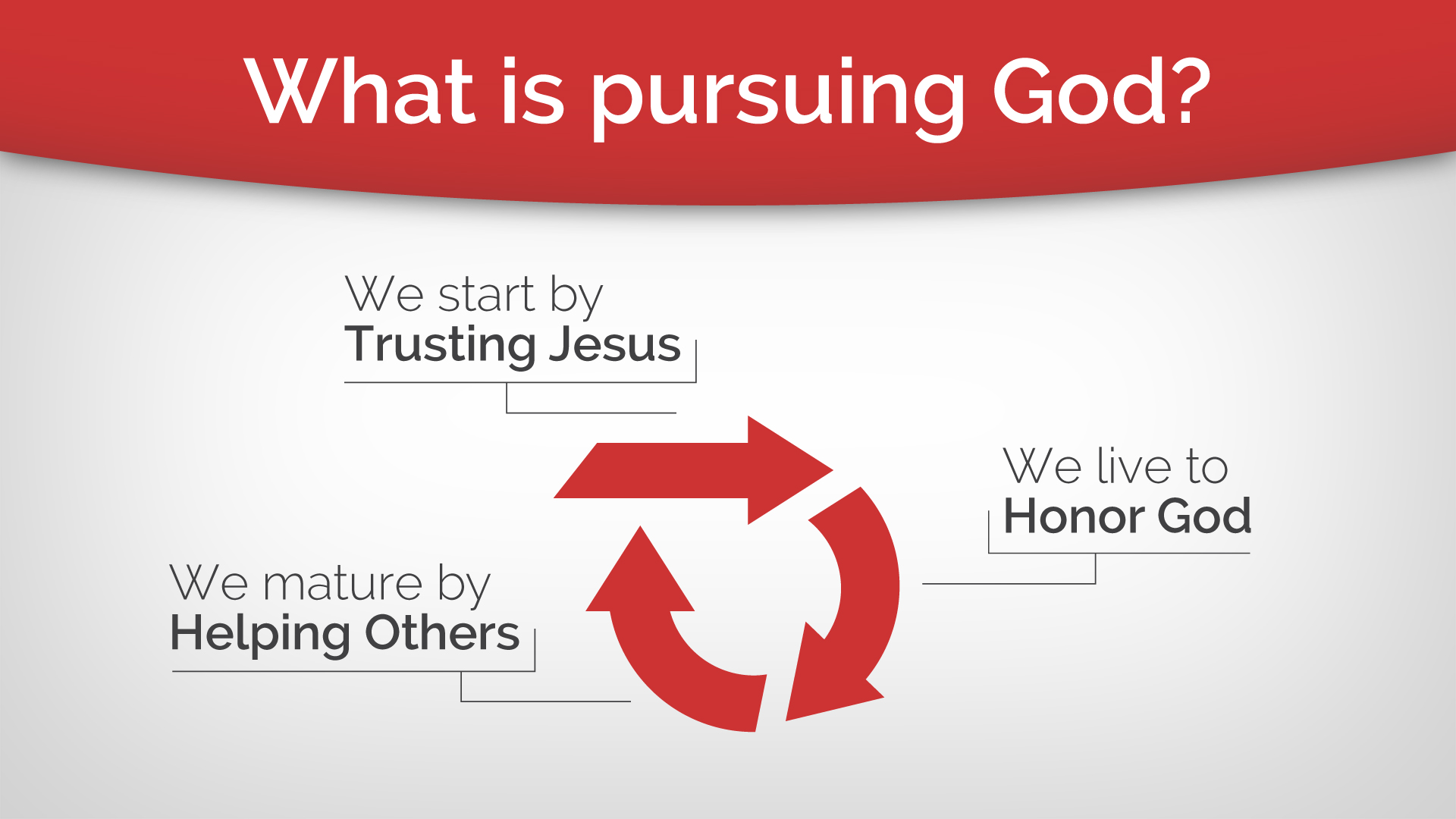
Welcome to pursueGOD.org! Our conversation starters are designed to help you become a "full circle" Christian, whether you've been going to church a long time or you're brand new at it. Here's the picture we're working toward:
The Process
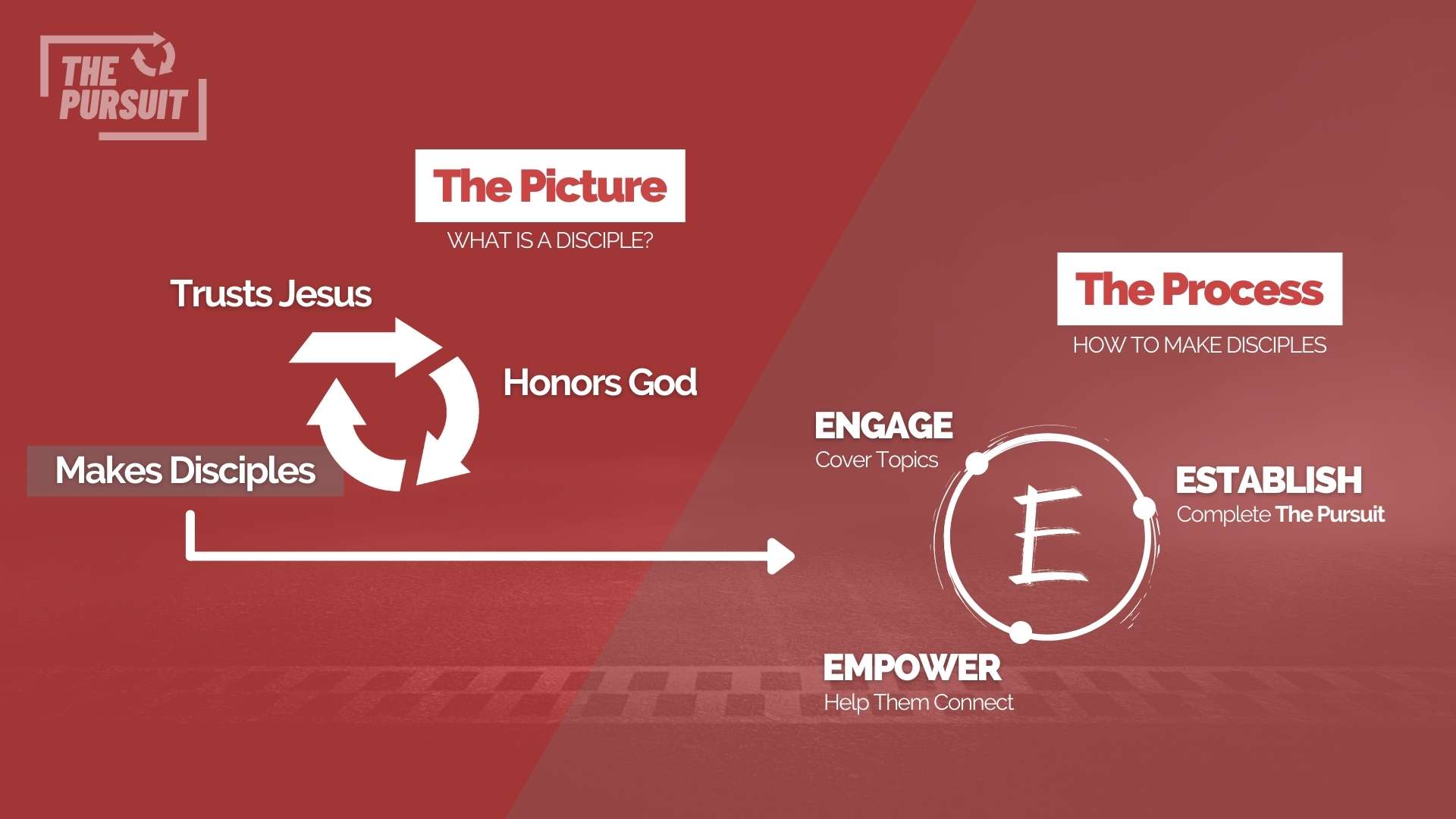
Ready to pursue God with your family, group, or mentor? Try following the 3E process:
- Engage: Start talking about life, faith, and everything in between using the topics below or on another category page.
- Establish: Start "The Pursuit" - our 12-week discipleship track available on every category page - to establish a full circle Christian faith.
- Empower: Complete "The Pursuit" and you'll be ready to go out and help others pursue God.
Your Part
Take ownership of your pursuit of God with four personal commitments:
- Come prepared. Make a commitment to watch the video before you meet. This will make your conversation more meaningful for everyone.
- Listen up. Don't just bring your ideas and opinions to the table. Develop a teachable heart, and come ready
to hear from God and others.- Discover truth. We believe the Bible has answers to every question. If you keep showing up, you can expect to discover a fresh perspective on just about any topic.
- Act on it. The goal in every conversation is transformation, not just information. Be ready to step up and act on what you're learning.
Featured Topics
No posts found
BROWSE MORE TOPICS
- Posts not found
BROWSE ALL KEYWORDS
A
- Abortion (4)
- Accountability (3)
- Addiction (Drugs/Alcohol) (38)
- Addiction (Porn/Sex) (37)
- Adoption (7)
- Aging Parents (5)
- Ancient History (8)
- Angels/Demons (11)
- Anger (13)
- Anxiety/Fear (23)
- Apologetics (53)
- Atheism (3)
- Atonement (9)
B
- Baptism (15)
- Bible Characters (18)
- Bible (Investigate) (10)
- Bible Study (14)
- Bitterness (12)
- Blended Families (6)
- Book Intros (6)
- Boundaries (15)
- Budgeting (17)
C
- Calvinism/Arminianism (6)
- Children's Ministry (4)
- Christmas (4)
- Christology (8)
- Church Health (8)
- Church History (15)
- Communication (37)
- Communion (5)
- Comparison (6)
- Conflict (10)
- Covenants (14)
- Creation (10)
- Cults (1)
D
- Dating (37)
- Death (4)
- Debt (7)
- Depression (13)
- Dispensationalism (4)
- Divorce (20)
E
- Easter (4)
- Emotions (26)
- End Times (11)
- Entertainment (14)
- Envy (7)
- EQ (22)
- Eschatology (13)
- Evangelism (34)
F
- Faith (10)
- Fasting (4)
- Fatherhood (15)
- Forgiveness (38)
- Friendship (16)
G
- Gender Roles (4)
- Gender/Sexuality (23)
- Giving (26)
- God (47)
- God's Promises (5)
- God's Will (12)
- Gospel (9)
- Gossip (5)
- Grace (20)
- Grief (36)
- Guilt/Shame (11)
H
- Happiness/Joy (7)
- Healing (6)
- Heaven/Hell (48)
- Holy Spirit (13)
- Honoring God (36)
- Humanity/Sin (14)
- Hurry (7)
I
- Identity (18)
- Immigration (5)
- Investigate (Christianity) (33)
- Investigate (God/Jesus) (34)
- Islam (9)
- Israel (8)
L
- Legalism (1)
M
- Making Disciples (36)
- Marriage (Communication) (28)
- Marriage (Love) (32)
- Marriage (Trust) (22)
- Men (14)
- Military (9)
- Miracles (15)
- Mormonism (42)
- Motherhood (1)
O
- Occult (8)
- Old Testament (66)
P
- Parenting Adults (3)
- Parenting Kids (77)
- Parenting Teens (62)
- Pastoral Care (8)
- Pastors/Elders (33)
- Patience (1)
- Politics (20)
- Poverty (8)
- Prayer (35)
- Preaching (15)
- Premarriage (24)
- Priesthood (16)
- Prophecy (4)
- Proverbs for Men (31)
- Purity (7)
R
- Racism (9)
- Recovery (2)
- Relationships (25)
- Repentance (9)
- Retirement (3)
S
- Sabbath (7)
- Salvation (65)
- Satan (1)
- Science (1)
- Serving (10)
- Sex (22)
- Sexual Abuse (5)
- Sin (87)
- Social Media (19)
- Spiritual Disciplines (52)
- Spiritual Gifts (6)
- Spiritual Growth (13)
- Spiritual Warfare (13)
- Sports (33)
- Suffering (1)
- Suicide (3)
- Systematic Theology (27)
T
- Theological Distinctives (50)
- Tithing (1)
- Training (Mentoring) (49)
- Training (Small Groups) (24)
- Training (Worship) (20)
- Trinity (18)
- Trusting Jesus (25)
U
- Universalism (11)
W
- Women's Series (4)
- Word Studies (24)
- Worldviews (44)
- Worship (12)
INTRO
01 Full Circle
Why Pursue God?
This is Lesson 1 in The Pursuit series.
God promises that those who make a genuine commitment to pursue him will find him (Jeremiah 29:13). Do you believe that? Do you think it could be true for you? Take a quick personal survey as we get started in this series: do you feel close to God or far from him? Where would you put yourself on the journey? Here’s the great news: wherever you are, God is not far away!
Let’s start with a birds-eye view of what God is like. Many people think he’s harsh, judgmental, aloof. But the Bible paints a different picture of God. In this lesson we’ll look at three things you need to know about the heart of God, and the good news it reveals about pursuing him.
God Is For You
Everyone knows what rejection feels like. It’s terrible. Maybe you’ve been rejected by a friend, a spouse, or even a parent. You’ve tried to win their approval or ask for forgiveness, but nothing has worked. And so the sense of rejection grows even more depressing and hopeless. Some people perceive a relationship with God that way. For whatever reason, they feel unworthy or unlovable, or just plain irreligious. For them, God is out of reach.
But Jesus shows us the truth: God is for you, not against you. Through his life and teachings, Jesus shocked the religious world with his attitude toward the lost and irreligious. He invited lowly fishermen and despised tax-collectors – not religious experts – to be in his inner circle. And then he went around rubbing shoulders with drunkards, healing the demon-possessed, and touching the untouchables. Jesus didn’t avoid the broken and the lost, he sought them out. Here’s a perfect example:
Matthew 8:2-3 Suddenly, a man with leprosy approached Jesus and knelt before him. “Lord,” the man said, “if you are willing, you can heal me and make me clean.” Jesus reached out and touched him. “I am willing,” he said. “Be healed!” And instantly the leprosy disappeared.
A couple of things jump out in this passage. First, the leper knew that Jesus had the ability to heal – he just didn’t know if he had the willingness to do it. For most people, it’s easier to believe that God is powerful than to believe that he is good. But here’s the truth: he is both! God’s good enough to care about our everyday lives, and he’s powerful enough to do something about it. He’s not just able to help us; he’s willing!
And consider how Jesus healed the leper: he touched him. That was unthinkable in Jesus’ day. Leprosy was highly contagious, and Jesus was risking infection by reaching out. Certainly he could have just spoken the word of healing, as he had done so many times before. But Jesus wanted to prove a point about God: he cares personally about people, and he’s not afraid of their condition. The healing power of Jesus was more contagious than any disease, and so the leper was healed.
But it’s not just the broken and the desperate who can benefit from a pursuit of God. Jesus wants a relationship with anyone who’s willing to recognize their need for him:
Mark 2:17 I have come to call not those who think they are righteous, but those who know they are sinners.
Here’s the great irony of religion: the ones who look the most religious are usually the furthest from God. Jesus has nothing to offer to self-righteous people because, from their perspective, they have no need of a savior. What about you? Do you need God’s help? He’s willing to give it. God is for you, not against you.
Life to the Full
God’s heart for you puts a whole new kind of life on offer, and Jesus called it “life to the full.” It’s the secret to deep friendships, healthy emotions, meaningful work, and joyful connection with God. It’s an offer that promises to impact both your everyday life and your eternal destiny. Jesus is working for it while his enemy, the devil, is working against it. Here’s how Jesus said it:
John 10:10 (NIV) The thief comes only to steal and kill and destroy; I have come that they may have life, and have it to the full.
We have a simple picture for this “full life” vision, and we call it going “full circle” in your faith. It provides the framework for this book, and it looks like this:
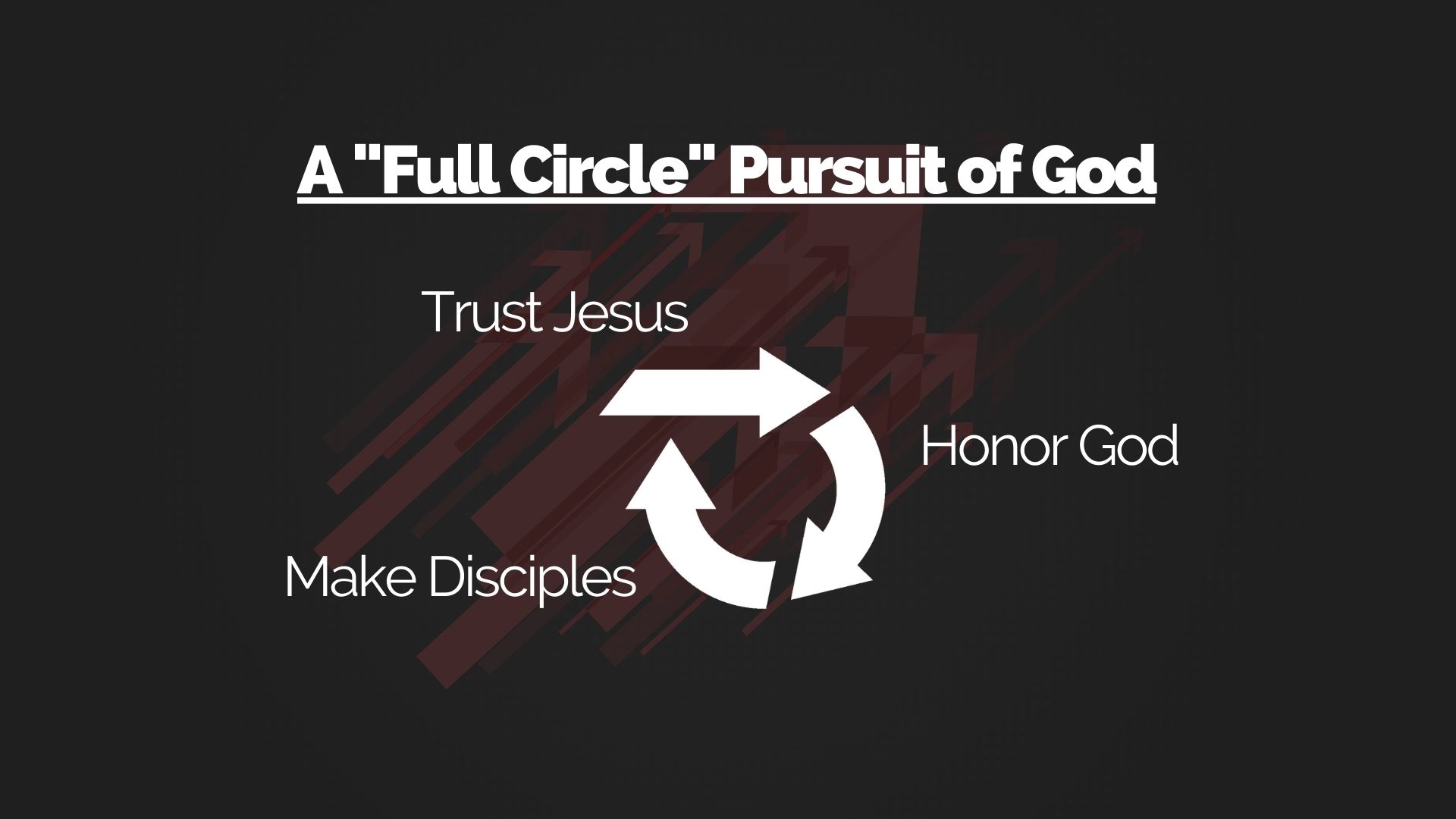
The first arrow represents how we start a relationship with God, and it’s simply by trusting Jesus (Romans 3:22). Faith changes our standing with God in an instant, offering the promise of eternal life. We’ll cover this in chapters 4-6 of this book.
The second arrow represents what happens after we come to faith in Jesus. A new desire to honor God is birthed within us – which becomes an external reality over time as we are transformed from the inside out (2 Corinthians 5:17). We’ll cover this in chapters 7-9 of this book.
The third arrow represents the thing that most Christians neglect to do: start making disciples. Life to the full isn’t complete until we go “full circle” and help someone else pursue God (Matthew 28:19). We’ll cover this in the final chapter of this book.
Hide and Seek
So a pursuit of God can change everything for you, but it turns out the pursuit isn’t just up to you. There’s a power at work behind the scenes who is far stronger than your best efforts or noblest intentions. The truth is, before you even thought about pursuing God, he was pursuing you. This is what King David learned in the Old Testament, and he wrote about it in one of his psalms:
Psalm 139:16 (NLT) You saw me before I was born. Every day of my life was recorded in your book. Every moment was laid out before a single day had passed.
David had a complicated story. He was the almost-forgotten shepherd boy who grew up to be a king. Along the way he fought battles, gained fame, and experienced tragedy. Psalm 139 was probably penned by David as an older man, someone who had seen it all and was just now starting to make sense of life. David was learning that God had been there all along, through the ups and downs of life. God was fully invested in David’s story – even before his story began.
And the same is true for your story, even if you can’t see it yet. God saw you before you were born. In fact, your existence was his idea. And every moment was laid out for you before a single day had passed – even this moment.
Some people imagine that God is playing a cruel game of hide and seek with humanity. The Bible is a massive book. Churches are intimidating. God seems so complicated. In the midst of the confusion, God makes a simple promise:
Jeremiah 29:13 If you look for me wholeheartedly, you will find me.
God is not some far-away, uninterested deity. He wants to be found by you – and he has been working since the beginning of time to make it happen. God made the first move; the next move is up to you.
So what’s your role in all of this? What does God require of you? For now, just be genuine in your pursuit. Put aside your preconceived notions and come to God with an open mind and a willingness to learn. And then open the Bible, because that’s the place where we learn about Jesus.
The Takeaway
Pursuing God is the most important journey you will ever take because it addresses your greatest need: reconciliation with your Creator. We pursue him because he first loved us, sending Jesus to bridge the gap created by our sin. By seeking God wholeheartedly, we find the forgiveness, identity, and eternal purpose that nothing else in this world can provide. It is the path to a life of true joy and lasting significance.
02 Why the Bible?
- Before we can pursue the God of the Bible, we need to examine the Bible itself. How do we know that we can trust what it says? That’s what we’ll cover in this lesson.
- Ancient manuscripts and archeological digs have stacked up in favor of biblical reliability. The New Testament has more manuscript evidence than any other ancient work.
- The Bible contains 66 books written by 40 authors over the course of 1500 years, and yet it tells one unified story.
- The Bible is ultimately about Jesus, and the changed lives of his followers is the most compelling proof of its message.
- If you are willing to come to God on his terms and take him at his word, then Jesus promises that you’ll discover the truth. John 7:16-17
- Read the talking points above as a group, including scripture references. What are your initial thoughts about these points or about the podcast lesson (see audio above)?
- Have you ever wondered about the reliability of the Bible? How big of an issue is it for your pursuit of God?
- Which of the three evidences above is most compelling to you, and why?
- Why is it surprising that the Bible tells one unified story? Do you agree that it is textually reliable?
- If Jesus hadn’t risen from the dead, what do you think his disciples would have done with their lives after his death?
- Read John 7:16-17. Are you interested in “doing the will of God”? Why do you think this is a prerequisite for discerning whether Christ’s teachings are true?
See also:
- Is the Bible Reliable?
- Which Bible Translation Should I Choose?
- How to Should I Start Reading the Bible?
- Is the Bible Just Another Book?
- Where Did We Get the Bible?
- What Is the Story of the Bible?
- What Is the Bible?
- What Is the Structure of the Bible?
- What’s the Best Way to Study the Bible?
- What Is the Story of the New Testament?
03 Imago Dei
- Whether you believe in biblical Christianity or not, you have been fundamentally shaped by its ideas. In this lesson we’ll investigate one of those ideas and how it has impacted the values we take for granted.
- The Bible teaches that humans are created in God’s image (“Imago Dei”). This gives every human inherent dignity, and it’s the key to understanding God’s attitude toward the world. Genesis 1:26
- “Imago Dei” is the basis for blessing all of mankind in the most practical way: it opens the door to the freedoms we have come to expect. God invites all people to experience life, liberty, and the pursuit of happiness.
- Being created in the image of God means you have the capacity for a real relationship with the God who created you. This relationship transforms your whole way of relating, so you are able to love your neighbor and yourself. Matthew 22:37-40
- Read the talking points above as a group, including scripture references. What are your initial thoughts about these points or about the podcast lesson (see audio above)?
- Why is it important to have a framework for where humans derive value and purpose? How do you see our culture wrestling with these ideas today?
- Read Genesis 1:1-26. What is the significance of the wording in the creation account?
- What does it mean that we were created in God’s image? What doesn’t it mean?
- Read Matthew 22:37-39. What does it look like to love the way Jesus describes in this passage?
- Read Luke 12:6-7. How do you need to adjust the way you see yourself – or someone else – in this world?
See Also:
#InvestigateChristianity
- Where Did We Get the Bible?
- Is There Only One True Church?
- What Does God Really Think About Women?
- What Does the Bible Say about Salvation?
- What Does the Bible Say about Sin?
- What Does the Bible Say about Imago Dei?
- Is the Bible Reliable?
- Why Pursue God?
- The Meaning of “Love” in Hebrew
- God and Math: Experiencing Faith
- God and Math: Exploring Beauty
- God and Math: Embracing Mystery
- What Is a Biblical Worldview?
- The Meaning of “Joy” in Greek
- What Happens One Minute After You Die?
- The Imperfect Journey of Doubting Thomas
- The Shocking Testimony of the Women at the Tomb
- How Christianity Is Unique Among World Religions
- Three Longings Built into Every Heart
- Is There Really “No Evidence” for God’s Existence?
- 5 Proofs That Jesus Is God
- God Wants Your EQ
- 15 Things Not to Say to an Atheist
- Why Does God Let Bad Things Happen?
- Who Did Jesus Think He Was?
- The Dilemma of the Problem of Evil
- Don’t Just Follow Your Heart
- How Many Paths Are There to God?
- Are People Basically Good?
- The Meaning of “Love” in Greek
- If Everything God Makes Is Good, Where Did Evil Come From?
- Relativism and the Rejection of Absolute Truth
- The Complex Human Body as Evidence of a Creator
TRUST JESUS
04 What Is Sin?
- Sin is going your own way, trusting and acting on your own opinions and feelings instead of on God’s truth. Genesis 3:1-6
- Sin brings brokenness in every way, keeping us from experiencing the fullness of life that God wants for us. John 10:10, Galatians 5:19-21
- We’re all born into sin and therefore we all must be “born again”. John 3:3, Romans 3:10-12, Romans 3:23
- Read the talking points above as a group, including scripture references. What are your initial thoughts about these points or about the podcast lesson (see audio above)?
- On a scale of 1 (Mother Teresa) to 10 (Hitler), how bad of a “sinner” are you? How would someone else rate you?
- Why are feelings not the best barometer for good choices? How have some of your choices negatively impacted your life?
- Read Genesis 3:1-3. Why do you think the serpent started with a question?
- Read Galatians 5:19-21. Why do you think Paul takes the time to list out a bunch of sins? How have you and others justified some of these sins?
- Take an honest look at your own life and identify a few areas of brokenness that you need to address.
See Also:
05 Who Is Jesus?
- There is peace with God through Jesus Christ, who is Lord of all. Acts 10:36, Colossians 1:15-17
- Jesus went around doing good and healing all who were oppressed by the devil. Acts 10:38, Luke 4:40-41
- They put him to death by hanging him on a cross, but God raised him to life on the third day. Acts 10:39-40, Luke 23:44-46, Luke 24:1-6
- Jesus is the one appointed by God to be the judge of all—the living and the dead. Acts 10:42, Romans 2:9,16
- Everyone who believes in Jesus will have their sins forgiven through his name. Acts 10:43, Romans 3:23-25
- Read the talking points above as a group, including scripture references. What are your initial thoughts about these points or about the podcast lesson (see audio above)?
- What, if anything, did you learn about Jesus when you were younger?
- Why is it important to believe that Jesus is fully God? How would it impact Christianity if he were something less?
- Why did Jesus take the time to do good and heal people? Have you ever seen God perform a miracle?
- Why is it important that Jesus rose from the dead? How would it impact the basic Christian message if he hadn’t?
- What questions do you still have about Jesus? Make a list.
See Also:
06 Saving Faith
- Out of love, God sent Jesus into the world to solve our sin problem. 1 John 4:9
- Saving faith requires both the right information and the right attitude (“repentance”). Acts 2:37-38
- We start a relationship with God by personally trusting Jesus for salvation. Romans 10:9
- We are saved 100% by grace the moment we trust Jesus for salvation. Ephesians 2:8
- God offers this free gift to everyone, no matter what you’ve done. Romans 3:22
- Read the talking points above as a group, including scripture references. What are your initial thoughts about these points or about the podcast lesson (see audio above)?
- Read 1 John 4:9. How did God show his love? What was his purpose behind it all?
- Make a list of the “right information” we need to be saved. Explain what it means to have the “right attitude”.
- Read Ephesians 2:8. Why is it important to see grace as a gift?
- Read Romans 3:22. What does the verse say we have to do to receive the gift of salvation? Do you have a hard time believing that God loves you despite your past? Explain.
- Read Romans 10:9. Have you made a confession of faith in Jesus yet? If not, what questions do you still need answered? Are you ready to do it today?
See Also:
#TrustingJesus
- How Do I Get to My Faith Moment?
- What Is True Repentance?
- What Is the Difference Between Good Guilt and Bad Guilt?
- Are You Ready to Get Baptized?
- How Good is Good Enough for God?
- Resurrection Sunday (Mark 16)
- 10 Sinful Responses to Sin
- The Trinity: God Is Three Persons
- Is It a Sin to Get “Buzzed”?
- Six Principles for Controlling Sinful Thoughts
- 5 Proofs That Jesus Is God
- Resurrection Evidence: 5 Reasons to Believe that Jesus Really Rose
- The Power of Easter
- Can I Believe in Jesus and Not Be Saved?
- Is There Such a Thing as the Unforgivable Sin?
- 7 False Teachings to Avoid
- After Death Is There a Final Chance to Be Saved?
- Does Baptism Save?
- What If I Can’t Identify My Defining Moment?
- Be Sure You’ll Get to Heaven
- Make Sure You Get Jesus Right
- Common Baptism Questions
- What Does It Mean to be “Born Again”?
- What’s on Your Sin List?
- Can Christians Lose Their Salvation?
HONOR GOD
07 What is Baptism?
So you’re a Christian. Now what? Getting to your defining moment of faith is more than the end of your old life; it’s the beginning of a new one! Here’s how Paul said it to the church in Corinth: 2 Corinthians 5:17 This means that anyone who belongs to Christ has become a new person. The old life is gone; a new life has begun! Let’s put it in the context of our “full circle” picture of Christianity. Genuine faith (arrow one) leads to a new way to live our lives (arrow two). We’re not in charge anymore; now we want to find out what pleases God and do it (Ephesians 5:10). So what does this look like practically in our everyday lives? It would take a lifetime to explore this question fully, but the first answer is surprisingly simple. Read the New Testament and you’ll see that almost every new Christian took the same first step after coming to faith in Jesus: they got baptized. Baptism is the ancient Christian ritual of immersing someone in water as a symbol of Christ’s death and resurrection. In this lesson we’ll outline five things you need to know about it, and we’ll end with a simple conclusion: you should get baptized! Let’s start with the obvious: baptism doesn’t save you. Remember what we learned in the last lesson: we start a relationship with God by trusting Jesus, PERIOD. Baptism is important, and we’ll explain why in the next several points. But it is not required for salvation. Paul made this point clear enough in his letter to the Romans: Titus 3:5 [God] saved us, not because of the righteous things we had done, but because of his mercy. He washed away our sins, giving us a new birth and new life through the Holy Spirit. If baptism were required for salvation, then our salvation would be dependent in part on our own work. But Jesus did all of the work on the cross to save us! Consider the thief on the cross next to him (Luke 23:39-43), the one who professed his faith in Jesus and begged for his mercy. Jesus’ response was simple: “Today you’ll be with me in paradise.” The thief was moments away from death, and he had no time to get baptized. Not a problem. Just like the thief on the cross, we are saved by faith in the finished work of Christ. If baptism doesn’t save, then why do it? The obvious reason is this: Jesus said so. Matthew records one of his final commands to his disciples, known today as the “Great Commission”: Matthew 28:19 (NLT) Therefore, go and make disciples of all the nations, baptizing them in the name of the Father and the Son and the Holy Spirit. Jesus told his disciples to go make disciples, and he gave them very simple instructions about what to do next: baptize them. So that’s just what they did. Read the series of Acts for yourself, and pay attention to what happened after someone came to faith in Jesus. They got baptized. If you’ve put your faith in Jesus, you should get baptized. If somehow you missed the memo years ago, it’s not too late to obey. Get baptized because Jesus said so; that should be the only reason you need. The Christian life is all about honoring God, and it promises to be a journey filled with plenty of ups and downs. You’ll be challenged to submit to God’s way in the areas of relationships, sexuality, money, marriage, parenting, and more. You’ll be stretched to obey some things that don’t come naturally at first. But baptism is not like that. It’s one of the easiest steps you’ll be asked to take, and God has front-loaded it because he wants to give you an early win. Think about how money works. If you’ve got a bunch of debts to eliminate, conventional wisdom says to get rid of the smallest debt first. The reason for this is simple: the sooner you can check off one of your debts, the better you’ll feel about checking off all of your debts. Getting an early win will motivate you to tackle the next thing, and over time the psychological strategy will pay off. The Ethiopian eunuch understood this principle. Immediately after Philip shared the gospel with him, he was ready to exercise his “obedience” muscle. Acts 8:36 (NLT) As they rode along, they came to some water, and the eunuch said, “Look! There’s some water! Why can’t I be baptized?” The eunuch was baptized right away, and he certainly continued to honor God when he got back to his homeland of Ethiopia. If you haven’t taken this first step – as easy as it is – then what other steps are you unwilling to take? Why not be baptized? Check that off so you can move on to even bigger things. When we get baptized, we’re publicly identifying ourselves in a couple of important ways. Paul explained it like this to the Christians in Rome: Romans 6:3 (NLT) Or have you forgotten that when we were joined with Christ Jesus in baptism, we joined him in his death? Two things jump out in this verse. First, Paul says “we”. He was baptized when he came to faith, and so was every other Christian in Rome. Baptism, then, was an important act of unity. It’s not about membership in a local church; it’s much greater than that. Through baptism, you join a movement of Christians across the world and throughout history. You’re doing the same thing that Paul, James, John, and even Jesus did (Mathew 3:13-17). And if your grandparents were Christians, they did it too. Someday your great-grandkids may join you in baptism. That’s a powerful thought. But baptism is not just about identifying with other believers; we also identify with Jesus. Paul said that we “joined him in his death.” Like everything else in the Christian life, baptism is focused on the death and resurrection of Jesus. It’s not an empty religious ritual; it’s a reminder that Jesus is at the center of our lives. In simplest terms, baptism is an external symbol of something that has already happened to us on the inside. Remember: baptism doesn’t save you. But the act of baptism is a physical reminder to us and others of a deeper spiritual reality. When couples get married, they usually exchange wedding rings. Those rings are important, but they’re just symbols of the bigger thing: vows. Just as taking rings off doesn’t nullify wedding vows, failing to get baptized doesn’t nullify faith. But why not wear this important symbol? When you make the choice to go down into the waters of baptism you are memorializing the death of Jesus. When you come up out of the water you are signifying his resurrection – along with your new life in Christ. That’s how Paul described it: Romans 6:4 (NLT) For we died and were buried with Christ by baptism. And just as Christ was raised from the dead by the glorious power of the Father, now we also may live new lives. So, have you trusted Jesus for salvation? Are you ready to start honoring God with your life? The first step is not complicated. Don’t overanalyze it. Get baptized.
Baptism Doesn’t Save
Simply Obey
An Early Win
An Act of Identification
An Outward Symbol
- Baptism doesn’t save you; we start a relationship with God by trusting Jesus and his finished work on the cross. Romans 3:22
- Jesus said to get baptized, and that’s the main reason we should do it! Matthew 28:19
- Baptism is an early act of practical obedience – and it’s one of the easier commandments. Acts 8:36
- Baptism is an act of identification – both with Christ and his church. Romans 6:3
- Baptism is an outward symbol of an inward reality. Romans 6:4
- Read the talking points above as a group, including scripture references. What are your initial thoughts about these points or about the podcast lesson (see audio above)?
- What has your understanding of baptism been up to now? Is there anything in this chapter that surprised or confused you? Explain.
- Read Matthew 28:19. Why do you think some people become Christians and yet never get baptized?
- Baptism is one of the easiest steps of obedience. Make a list of some of the harder things you’ll have to do as a Christian.
- Read Romans 6:3-4. What does baptism symbolize? What are you declaring to the world when you do it?
- Have you been baptized? If so, when – and was it for the right reasons? If not, are you ready to do it? Why or why not?
See Also:
08 The Three Keys
- The Spirit leads from the inside out, empowering us to honor God every day. Ezekiel 36:26-27, 2 Peter 1:3
- The Bible guides us and shows us the attitudes and actions that honor God. 2 Timothy 3:16-17, Luke 6:46-48
- Other believers help us stay on the right track, both one-on-one and in the local church. Galatians 6:1-2, Romans 12:6-8
- Read the talking points above as a group, including scripture references. What are your initial thoughts about these points or about the podcast lesson (see audio above)?
- Share a time when you relied on willpower to accomplish a goal – and it didn’t work. What led to your failure?
- Read 2 Peter 1:3. How does this verse encourage you in your desire to honor God with your life?
- Read Ezekiel 36:26-27. How has your heart been stony toward God in the past? What does a tender heart for God look like in your life and in others?
- Read 2 Timothy 3:16-17. Why is the Bible worth our time? How does the Bible help us to live God-honoring lives?
- Read Galatians 6:1-2. In your opinion, what does it look like to bear the burdens of others? Share an example.
See Also:
09 The Big Five
- Make a habit of talking to God, building a relationship with him like any other person.
- Read the Word devotionally every day, and set aside special times for a deeper dive.
- Connect to God’s people in three environments: large (church), small (group), and individual (mentoring).
- Giving should be periodic, proportionate, and a little bit painful.
- Jesus called it disciple-making, and it’s about personally helping someone pursue God.
- Read the talking points above as a group, including scripture references. What are your initial thoughts about these points or about the podcast lesson (see audio above)?
- Name one good habit you had as a kid. Did you have a habit that was hard to break when you were young?
- Give yourself a grade on each of the five habits above. Which one are you most eager to improve? Why?
- Read 1 Thessalonians 5:17. What does prayer look like in your life? What have you learned about the power of prayer?
- Read Hebrews 10:25. How does community help us in our pursuit of God?
- Read 2 Corinthians 8:7. What do you think Paul meant by “excel in giving”? What could it mean for you today?
See Also:
#HonoringGod
- How Do I Practice Humility?
- What Did John Wesley Teach about Christian Perfection?
- Is My Old Nature Destroyed When I Become a Christian?
- What Is My Role in Sanctification?
- How Does God’s Word Judge Us?
- How Do I Use the P-R-A-Y Method of Prayer?
- What Is the Fear of the Lord?
- What Is Prayer All About?
- What Are the Big “5” Spiritual Disciplines?
- What Are the Keys to a Godly Life?
- What Does the Bible Say about Baptism?
- How To Spot a Spiritual Fraud (Mark 12:38-44)
- The Ancient Secret of Spiritual Disciplines
- Proving His Authority: The Story of Jesus and the Demon-Possessed Man (Mark 1:21-28)
- Sanctification and the Christian Life
- Be the Bigger Person the Jesus Way
- The Jesus Way of Saving Your Marriage
- Is it Wrong for Christians to Take Vows?
- Stop Playing Games with the Truth as a Christian
- Radical Sexual Purity the Jesus Way
- Anger Management the Jesus Way
- The Six Antitheses of Jesus
- Five Steps to Winning the War Within as a Christian
- Trust Your Instruments
- “Be This” In the Culture Wars
- God’s Plan for Dealing with Habits
- 3 Metrics for Giving as a Christian
- Finding Your Place in the Body of Christ
- All About Walking by the Spirit
- How to Uncomplicate Your Prayers
- Am I Really Saved If I Keep Sinning?
- The Biblical Theme of Law
- Common Baptism Questions
- Is Christ at the Center or the Fringe?
- What if I Don’t Want to Read the Bible?
- The Sinful Nature vs. the Fruit of the Spirit in Galatians 5
HELP OTHERS
10 Commission
So far we have investigated the first two aspects of a “full circle” Christian: trusting Jesus for salvation and honoring God in our thoughts and actions. Visit any Christian church in the world and you’ll find these basic teachings in one form or another. That’s the good news. But here’s the bad news: that’s as far as it goes for most Christians. If someone attends church, prays “the prayer,” and starts giving financially, all is well! The mission has been accomplished in that person’s life, and he or she can carry on with confidence that they are mature in Christ. But they are not. Jesus has something more in mind for his true disciples, and the New Testament is full of proof. The follower that Jesus envisioned goes “full circle” to include a third leg of the journey, and that’s what these final three topics are about. Here’s the picture: Let’s make this personal right from the start: Jesus wants YOU to make disciples. It’s not something reserved for the pastors, and it was never intended to be just for the extroverted Christians who love to talk about Jesus. It’s for everyone in the church. Jesus wants disciple-making to be the norm, not the exception. That means YOU should start making disciples. And here are three reasons why: We make disciples because Jesus said so. In one of his last speeches to his disciples, Jesus made his expectation plain: Matthew 28:18-19 (NLT) Jesus came and told his disciples, “I have been given all authority in heaven and on earth. Therefore, go and make disciples of all the nations….” Jesus wasn’t making a suggestion and he didn’t ask their opinion. He had just spent three years discipling his disciples, and now it was their turn. After his death and resurrection, Jesus was returning to the Father. His task on earth was complete. Now his followers would have to step up and finish the job. Imagine your dad telling you to take out the garbage. He makes it crystal clear, and yet you willfully disobey. How do you think he would respond? How would YOU respond? Jesus commanded us to make disciples, emphasizing its importance by making it one of the last things he said on this earth! Helping people pursue God is a matter of obedience to the Great Commission. This should be reason enough to start doing it. Jesus envisioned a church where pastors equip and people do the ministry. His strategy was articulated best by the apostle Paul to the church in Ephesus: Ephesians 4:11-12 (NLT) Now these are the gifts Christ gave to the church: the apostles, the prophets, the evangelists, and the pastors and teachers. Their responsibility is to equip God’s people to do his work and build up the church, the body of Christ. Here’s what the average church looks like today: the pastor preps a sermon and the people invite their friends to come and listen. Sunday after Sunday they run the same play: the preacher ministers and the people spectate. For many churches it seems to work, especially if the worship team can put on a great concert! But the Apostle Paul prescribed a different strategy. In a biblical-functioning church, the pastors equip the people to do the work of the ministry. This way everybody wins: the pastors don’t get worn out and the people end up actually maturing in their faith. They have moved from consuming a product to producing disciples, and the whole church ends up “healthy and growing and full of love” (Ephesians 4:16). The final reason to make disciples is an appeal to the heart of every genuine follower of Jesus. Look around – people are confused and helpless, and the problem is getting worse every day. We make disciples because people need help on a personal level. Sermons are great, but sermons aren’t enough. Jesus himself made this point after gathering huge crowds to witness his miracles and listen to his teaching. Matthew 9:36-38 When he saw the crowds, he had compassion on them because they were confused and helpless, like sheep without a shepherd. He said to his disciples, “The harvest is great, but the workers are few. So pray to the Lord who is in charge of the harvest; ask him to send more workers into his fields.” Jesus’ heart broke for the crowd because they needed more help than what he could personally give them. How? Wasn’t he the Great Shepherd? Didn’t they just hear his powerful teaching? The fact is, sermons were never intended to be the end-all be-all for a healthy church. A preacher speaks truth to a crowd, and while it’s an important element in the church body, it doesn’t produce mature disciples by itself. People need to process truth in the context of a caring, personal relationship. God wants every follower to have a shepherd to help them along the way. (Matthew 4:19) At the end of Matthew 9 Jesus told his disciples to pray for more workers. Then in the next lesson their prayer was answered – when Jesus sent them out to make disciples! Today, YOU are the answer to that prayer. Are you willing to go? Maybe you’re willing but you don’t feel qualified to make disciples. So many Christians believe that they are not mature enough to help someone else pursue God. They ask, “What if they ask a question I can’t answer? What if I say the wrong thing?” These questions linger in the minds of many would-be disciplers, keeping Christians on the sidelines and in the shadows. And that’s just how Satan wants it. Jesus wants something different. He wants regular people making disciples, and that’s why he chose fishermen and tax collectors to be his first followers. Those guys weren’t ready for such a big assignment, but Jesus sent them out anyway. They matured as they made disciples, not before. This is what Paul explains in his letter to the Ephesians: Ephesians 4:14 (NLT) Then we will no longer be immature like children. We won’t be tossed and blown about by every wind of new teaching. We will not be influenced when people try to trick us with lies so clever they sound like the truth. Go back and read the entire section to get context for what Paul is teaching here. He’s saying that we’ll grow up, we’ll develop spiritual discernment, and we’ll build a defense against falsehood after we start making disciples. When we go out and “speak the truth in love,” we’ll begin to really understand it. Disciple-making comes first and maturity comes second, not the other way around. So what are you waiting for? Jesus told you to make disciples. It’s part of his strategy for a healthy church. People need your help at a personal level. And until you start doing it, you’ll never be fully mature as a Christian.The Commission
The Strategy
The Need
Mature Enough
- We make disciples because Jesus said so. Matthew 28:18-20
- We make disciples because Jesus envisioned a church where pastors equip and people do the ministry. Ephesians 4:11-12
- We make disciples because people need help on a personal level. Matthew 9:36-37
- Read the talking points above as a group, including scripture references. What are your initial thoughts about these points or about the podcast lesson (see audio above)?
- Share about a person who has encouraged you in your pursuit of God. What did they do that was so impactful?
- Read Matthew 4:19. Why do you think Jesus picked fishermen instead of Pharisees as his disciples? Which group of people do you most relate to?
- Read Ephesians 4:11-12. What’s the pastor’s job in the church? What’s your job?
- Define “full circle” faith in your own words. Where are you on the circle?
- Do you think you can help someone else pursue God? Why or why not?
See Also:
11 How It Works
If you’re a Christian, Jesus wants you to make disciples (Matthew 28:19). But how do you do it? Where do you start? PursueGOD offers a simple approach, modeled after Jesus’ own ministry. He discipled his followers through everyday conversations, helping them discover truth by asking questions and providing answers. PursueGOD disciple-making works the same way. If you can have a conversation, you can make a disciple. The process works in three simple steps: First, engage the person you’d like to disciple. Ask yourself, “What kinds of conversations does that person want to have? Is there a topic they’d like to talk about?” Disciple-making starts with putting yourself in the shoes of someone else. Where do they need help? How can you add value to their life? Many Christians make the mistake of getting too spiritual too quickly. We know that the deepest need in everyone’s life is Jesus – and we’re chomping at the bit to talk about it! But not everyone is ready for a spiritual conversation. These things take time, as Paul points out: 1 Corinthians 2:14 (NLT) But people who aren’t spiritual can’t receive these truths from God’s Spirit. It all sounds foolish to them and they can’t understand it, for only those who are spiritual can understand what the Spirit means. That’s why the first step is to engage. Ask the person where they would like to start, and simply offer to sit down for a conversation. Meet regularly to cover topics together as you build a relationship. If it helps, send them a link to one of these category listings, and invite them to choose where to start: Second, establish the person in the Christian faith. When the time is right, be sure to go over the basics of Christianity with the person you’re discipling. Talk about God’s heart for people. Cover the topics of sin and salvation and sanctification. Get specific about what it means to be a true disciple. We’ve put all of these important topics into a 12-part series called The Pursuit. So how do you know if the time is right to move from engaging (Step 1) to establishing (Step 2)? Pray about it! As you meet to talk about topics of interest to them, eventually you’ll start talking about spiritual things. Expect God to show up in your conversations over time, especially if you’re praying for him to reveal himself. Jesus said it himself when he sent out his closest disciples: Matthew 10:19-20 (NLT) … don’t worry about how to respond or what to say. God will give you the right words at the right time. For it is not you who will be speaking—it will be the Spirit of your Father speaking through you. This is where spiritual discernment comes in, along with a dose of boldness. As you’re covering miscellaneous topics, lay the groundwork for the foundational topics. Don’t be afraid to say, “I think it’s time we go through The Pursuit together. That’s the series that will establish you in the most important relationship of your life.” What if they’re already a Christian? Do it anyway! It’s always helpful to go over the basics of the faith, and it will ensure that you get to the final step in the process. The Pursuit introduces the idea of a “full circle” follower of Jesus, someone who makes a commitment to three basic things in life: It’s the last part of that image that leads to the final step in the disciple-making process. Third, empower the person to become a disciple-maker. The final three lessons in The Pursuit are training topics, explaining the picture and process of discipleship. This means that once you’ve finished The Pursuit, you’re ready to empower the person you’re discipling to get in the game and start making disciples, too. But they’ll probably need your help. Most people are intimidated by the thought of becoming a mentor and discipling someone. So you’ll have to convince them that they’re qualified, just like Jesus had to do with his disciples. And you’ll probably also have to help them get connected to someone else who needs a mentor. This is where the local church can come in. Ask a pastor where there’s a need, and then help make the handoff. Engage, establish, and empower. The whole process is designed to make disciple-making a thing again. It’s the kind of generational discipleship that Paul described to Timothy: 2 Timothy 2:2 (NLT) You have heard me teach things that have been confirmed by many reliable witnesses. Now teach these truths to other trustworthy people who will be able to pass them on to others. If you’re a Christian, Jesus wants you to make disciples. PursueGOD makes it easy. If you can have a conversation, you can make a disciple.Step 1: Engage
Step 2: Establish
Step 3: Empower
- PursueGOD offers a simple 3-step strategy for conversational disciple-making.
- First, engage the person you’d like to disciple. Meet regularly to cover topics together as you build a relationship.
- Second, establish the person in the Christian faith. Complete The Pursuit together to learn the essentials of the Christian faith.
- Third, empower the person to become a disciple-maker. Help them get connected to someone else who needs a mentor.
- Read the talking points above as a group, including scripture references. What are your initial thoughts about these points or about the podcast lesson (see audio above)?
- Engage, Establish, Empower – which one seems the most difficult to you? Explain.
- Describe the three mentoring principles in your own words. Which one resonates most?
- Describe the pathway for disciple-making in your own words. What’s the point to taking someone through a discipleship track?
- Do you feel qualified to make disciples? If not, what would qualify you?
- Make a list of a few people who might be interested in going through a discipleship track with you. Begin praying for those people.
- To finish your training, cover this full discipleship track with a training partner or group. Take turns leading each topic, and be sure to track your progress. Then start discipling someone on your list.
See Also:
12 The How
How Do I Make Disciples?
If you’re a Christian, Jesus wants you to make disciples (Matthew 28:19). But how do you do it? Where do you start? PursueGOD offers a simple approach, modeled after Jesus’ own ministry. He discipled his followers through everyday conversations, helping them discover truth by asking questions and providing answers.
PursueGOD disciple-making works the same way. If you can have a conversation, you can make a disciple. The process works in three simple steps:
Step 1: Engage
First, engage the person you’d like to disciple. Ask yourself, “What kinds of conversations does that person want to have? Is there a topic they’d like to talk about?” Disciple-making starts with putting yourself in the shoes of someone else. Where do they need help? How can you add value to their life?
Many Christians make the mistake of getting too spiritual too quickly. We know that the deepest need in everyone’s life is Jesus – and we’re chomping at the bit to talk about it! But not everyone is ready for a spiritual conversation. These things take time, as Paul points out:
1 Corinthians 2:14 (NLT) But people who aren’t spiritual can’t receive these truths from God’s Spirit. It all sounds foolish to them and they can’t understand it, for only those who are spiritual can understand what the Spirit means.
That’s why the first step is to engage. Ask the person where they would like to start, and simply offer to sit down for a conversation. Meet regularly to cover topics together as you build a relationship. If it helps, send them a link to one of these category listings, and invite them to choose where to start:
- Faith & Bible: Explore the basics of Christianity, dive into specific books of the Bible, or tackle tough theological questions.
- Life & Culture: Find a biblical perspective on hot-button issues, mental health, work, and everyday habits.
- Marriage & Family: Access practical tools for every stage—from dating and pre-marriage to parenting kids and teens.
- Just for You: Specialized resources tailored for Men and Women.
Step 2: Establish
Second, establish the person in the Christian faith. When the time is right, be sure to go over the basics of Christianity with the person you’re discipling. Talk about God’s heart for people. Cover the topics of sin and salvation and sanctification. Get specific about what it means to be a true disciple. We’ve put all of these important topics into a 12-part series called The Pursuit.
So how do you know if the time is right to move from engaging (Step 1) to establishing (Step 2)? Pray about it! As you meet to talk about topics of interest to them, eventually you’ll start talking about spiritual things. Expect God to show up in your conversations over time, especially if you’re praying for him to reveal himself. Jesus said it himself when he sent out his closest disciples:
Matthew 10:19-20 (NLT) … don’t worry about how to respond or what to say. God will give you the right words at the right time. For it is not you who will be speaking—it will be the Spirit of your Father speaking through you.
This is where spiritual discernment comes in, along with a dose of boldness. As you’re covering miscellaneous topics, lay the groundwork for the foundational topics. Don’t be afraid to say, “I think it’s time we go through The Pursuit together. That’s the series that will establish you in the most important relationship of your life.”
What if they’re already a Christian? Do it anyway! It’s always helpful to go over the basics of the faith, and it will ensure that you get to the final step in the process. The Pursuit introduces the idea of a “full circle” follower of Jesus, someone who makes a commitment to three basic things in life:
It’s the last part of that image that leads to the final step in the disciple-making process.
Step 3: Empower
Third, empower the person to become a disciple-maker. The final three lessons in The Pursuit are training topics, explaining the picture and process of discipleship. This means that once you’ve finished The Pursuit, you’re ready to empower the person you’re discipling to get in the game and start making disciples, too.
But they’ll probably need your help. Most people are intimidated by the thought of becoming a mentor and discipling someone. So you’ll have to convince them that they’re qualified, just like Jesus had to do with his disciples. And you’ll probably also have to help them get connected to someone else who needs a mentor. This is where the local church can come in. Ask a pastor where there’s a need, and then help make the handoff.
Engage, establish, and empower. The whole process is designed to make disciple-making a thing again. It’s the kind of generational discipleship that Paul described to Timothy:
2 Timothy 2:2 (NLT) You have heard me teach things that have been confirmed by many reliable witnesses. Now teach these truths to other trustworthy people who will be able to pass them on to others.
If you’re a Christian, Jesus wants you to make disciples. PursueGOD makes it easy. If you can have a conversation, you can make a disciple.
The Takeaway
Making disciples is the heartbeat of the Christian life and the most significant way you can spend your time. It starts with a simple “yes” to Jesus’s command and a willingness to be intentional with the people already in your life. By engaging, establishing, and empowering others, you can help them discover the life-changing power of Jesus and ensure the cycle of faith continues for generations to come.
#MakingDisciples
- How Do I Help Another Believer Struggling with Sin?
- What’s the Best Way to Share My Faith?
- Am I Qualified to Baptize Someone?
- Church History (Series)
- What Are the Essentials for Disciple-making?
- Why Make Disciples?
- How Jesus Kept Peter on Mission (Mark 14:27-31, 66-71)
- How Well Do You Know Your Bible? (Mark 12:28-34)
- The Cost of Discipleship (Mark 8:31-9:1)
- Training the Twelve (Mark 3:7-19)
- Discipling Through Topics 1-3
- Value #5: We’re On Mission With Jesus
- How Do I Use PursueGod Resources?
- The Holy Spirit’s Role in Disciple-making
- Discipling Through Topics 10-12
- Expectations in Mentoring
- Getting Rejected in Mentoring
- Disciple-Making Tips for Introverts
- How to End a Failed Mentoring Relationship
- Discipling Through Topics 7-9
- Discipling Through Topics 4-6
- The Tension Between Relationship and Mission as a Mentor
- Tracking Your Discipleship Relationships
- Pushing Past the Awkward in a Mentoring Relationship
- How to Power Through in Mentoring
- Here’s What You’ll Get Out of Mentoring
- Boundaries in Mentoring Others
- The Mentoring Law of Discovery
- Next Steps in Mentoring
- Methodolatry vs. Disciple-making
- You Were Born to Reproduce
- 7 Tips for Getting Started as a Mentor
- Help! I Don’t Have Anyone to Mentor
- How Long Should You Mentor Someone?
- The Maturity Myth
- Sharing the Right Truth at the Right Time

How to Use FT
When Jesus said "Go make disciples," he wasn't just talking about investing in other Christians at church. He wants you to go help someone who doesn't yet know Jesus! That's what FLEXTALK.org is all about. There you'll find conversation starters just like the ones at pursueGOD.org - except without explicit references to the Bible. Use it to engage people in meaningful conversations, and then bring them to pursueGOD.org when they're ready to talk about faith.
Click here to visit FLEXTALK.org.
Spread the Word
Spread the word about pursueGOD.org with all new Invite Cards - business cards emblazoned with the images from any of our category pages. Hand them out at church, at school, and in the community to open the door for disciple-making conversations in your world. Order cards for yourself, your small group, or your entire church.
- To order invite cards, click here.
- To help us continue to create free content, donate here.
- To learn about how your church can join our network, click here.