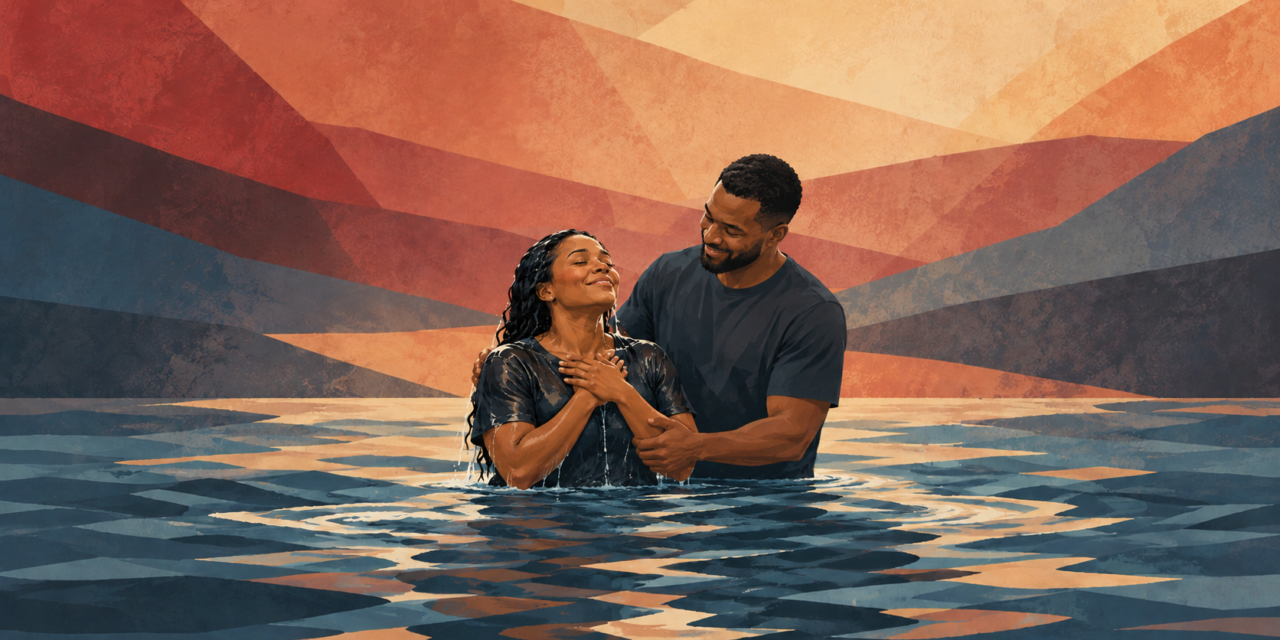
- Baptism is commanded by Jesus as part of making disciples, not as an optional extra for super-spiritual Christians. Matthew 28:18-20
- Salvation comes by faith in Christ alone, not by religious rituals like baptism. Romans 3:22
- Baptism is meant to be one of our first practical acts of obedience after we trust in Jesus. Acts 8:26-39
- Through baptism we publicly identify with Jesus’ death and resurrection and with his people, the church. Romans 6:3
- Baptism is an outward symbol of an inward reality—like a wedding ring that represents a covenant already made. Romans 6:4
- Not getting baptized doesn’t mean you’re not saved if you truly trust Christ, but obeying Jesus in baptism is an important step of spiritual growth. Romans 3:22, Romans 6:3-4
- If you’ve placed your faith in Jesus, the real question is not “Do I feel ready?” but “Will I trust and obey Jesus by taking this next step?” Matthew 28:18-20
- Read the talking points above as a group, including scripture references. What are your initial thoughts about these points or about the podcast lesson (see audio above)?
- Read Matthew 28:18-20. How does seeing baptism as part of Jesus’ command to “make disciples” change the way you think about it?
- Read Romans 3:22. Why is it so important to understand that baptism does not save us? How might confusion on this point affect someone’s faith or confidence before God?
- Read Acts 8:26-39. What stands out to you about the Ethiopian official’s response to the gospel? What might keep people today from responding that quickly in obedience?
- Read Romans 6:3-4. How does baptism picture both death and new life? Share how your own story (or testimony you’ve heard) connects with this picture.
- The lesson compares baptism to a wedding ring. In what ways is that analogy helpful? Are there any ways it falls short? Discuss.
- Where are you personally in the process—still exploring, already a believer but not yet baptized, or baptized in the past? What is your clear next step after today’s conversation?
● Baptism is an outward symbol of inward faith. It shows that you have already trusted Jesus for salvation. Romans 10:9.
● Trust in Jesus must come before baptism. Don’t get baptized because of pressure or ritual—only because you’ve believed in Christ for salvation. Acts 16:31.
● Baptism represents choosing God’s way. It symbolizes dying to your old life and rising into a new one. Romans 6:4, 2 Corinthians 5:17.
● Baptism is one of the first steps of obedience. It’s the beginning of a pattern of honoring God with your life.
● Invite the right people. Those who discipled you and those who need spiritual encouragement should be part of your baptism moment. Romans 10:10.
-
Read the talking points above as a group, including scripture references. What are your initial thoughts about these points or about the podcast lesson (see audio above)?
-
Why is it important to trust Jesus before getting baptized?
-
What does it mean to “go God’s way” after baptism? How is this different from being perfect?
-
Who has influenced your faith journey, and why might you want them involved in your baptism?
-
Who in your life might benefit spiritually from seeing your baptism?
-
How does baptism help you publicly declare your faith, according to Romans 10:10?
-
Which of the three questions do you personally need to reflect on most before taking the step of baptism?
● Baptism is a step after trusting Jesus for salvation. If your first baptism happened before true faith, you should be baptized again. Romans 6:3-4.
● Christian baptism must be connected to a Bible-believing church that teaches the biblical gospel. If your previous baptism wasn’t, seek a new one.
● If you want to be baptized again as a recommitment, examine your motives. Salvation comes through faith—not through baptism or any other work. Romans 3:22.
● Re-baptism isn’t commanded or forbidden in Scripture, so the key is your heart. Talk with a pastor or mentor as you seek clarity.
● Baptism is a powerful outward declaration of an inward transformation that only Jesus brings.
-
Read the talking points above as a group, including scripture references. What are your initial thoughts about these points or about the podcast lesson (see audio above)?
-
Looking back at your first baptism experience, what did you understand about salvation and faith at the time?
-
Why is the order—faith first, baptism second—so important for understanding the meaning of baptism?
-
How would you explain the difference between a Bible-believing Christian church and a group that teaches a different gospel?
-
What motives might lead someone to seek re-baptism in an unhealthy way? What might be healthy motives?
-
Read Romans 3:22. How does this verse help guard us from treating baptism as a work that saves us?
-
What next step (conversation, prayer, mentorship) do you personally need to take as you consider baptism or re-baptism?
- Baptism is an outward declaration of an inward faith. Salvation happens in the heart, not in the water. Colossians 2:12, Galatians 3:26
- A child should understand the gospel in simple, personal terms—who Jesus is, what He did, and why they need Him. Romans 10:9
- Early signs of discipleship include prayer, questions, and conviction about sin. We’re looking for evidence of spiritual life, not perfection. 2 Corinthians 5:17
- Baptism must be a child’s own decision, not motivated by parents or peers. 1 Corinthians 11:28
- Kids should understand what baptism represents: dying to the old life and rising to new life in Christ. Romans 6:4
- Age isn’t the determining factor—understanding and personal faith are.
- If a child isn’t ready, parents can keep discipling through ongoing conversations, modeling faith, and trusting God’s timing.
- Read the talking points above as a group, including scripture references. What are your initial thoughts about these points or about the podcast lesson (see audio above)?
- How would you explain the difference between salvation and baptism to a child?
- What signs of early spiritual growth have you seen in children—your own or others?
- Why is it important for baptism to be a child’s decision rather than something parents push for?
- How can parents wisely discern whether their child understands the gospel clearly?
- What are healthy ways to respond when a child wants to be baptized but isn’t quite ready?
- What practical next steps can a family take when their child truly is ready for baptism?
- Baptism might seem weird – like swimming at church. But it’s actually a really cool symbol that we believe in Jesus: his death (going into the water) and his resurrection (coming out to the water).
- Does baptism save us? Nope, getting baptized doesn’t save us from our sins. Jesus saves us from our sins the moment we put our trust in him. Baptism is what we do after we’ve trusted in Jesus because we want to tell the whole world that we belong to him.
- Why should we get baptized? Jesus told us we should get baptized. And, when Jesus tells us to do something, we should do it! The other reason is because baptism is a symbol for something that happens in our lives when we meet Jesus. Romans 6:4, Colossians 2:12
- Have you ever seen someone get baptized? What was it like?
- Read Romans 10:9-10. Who saves us? What do we need to do to be saved? Have you asked Jesus into your heart?
- Read Matthew 28:18-19. Who told us we should get baptized?
- Read Colossians 2:12. What does going into the water mean? What does it mean when we come out of the water?
- Are you ready to get baptized?
- What Is Baptism with the Holy Spirit? (Acts 2:1-13)
- Jesus Gets Us: Understanding His Baptism and Temptation (Mark 1:9-15)
- Everything You Need to Know About Baptism
- Should You Get Baptized Again?
- Five Verses on Baptism
- Are You Ready to Get Baptized?
- Does Baptism Save?
- Am I Qualified to Baptize Someone?
- Understanding Baptism
- Common Baptism Questions
- Let’s Talk about Baptism (Kids Series)
- 5 Facts About Water Baptism | Christian Basics for Jr. High #5
- The Baptism of Jesus
- When Should We Baptize Our Kids?
- What About Baptizing Infants?